To replace sugar with honey, use about ½ to ¾ cup of honey for every cup of sugar, reduce the other liquids in the recipe by about ¼ cup per cup of honey, and lower the oven temperature by around 15°C (25°F). Honey is sweeter than sugar, adds moisture and browns faster, so these three adjustments are what make the swap work.
The rest of this guide explains why, gives a quick conversion table in both cups and grams, and finishes with four short recipes, including two with a Turkish accent, so you can try it yourself.
Why honey behaves differently from sugar
Sugar is dry crystals of sucrose. Honey is a thick liquid made mostly of fructose and glucose, with around 17–20% water and a little natural acidity. That leads to four practical differences in the kitchen:
- Sweeter taste. Fructose tastes sweeter than sucrose, so you need less honey to get the same sweetness.
- Extra liquid. The water in honey adds moisture to batters and doughs.
- Faster browning. Fructose caramelizes at lower temperatures, so honey-sweetened bakes brown earlier and can scorch on top before the middle is done.
- It holds moisture. Honey attracts water from the air, so honey cakes stay soft for longer. The flip side is that crisp biscuits turn soft more quickly.
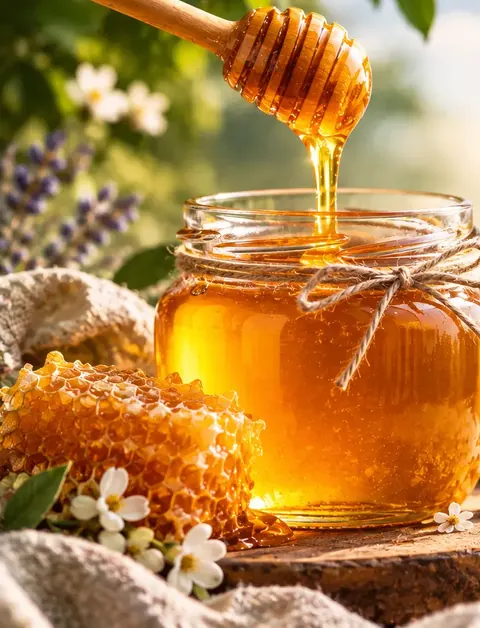
Honey also brings its own flavour. A mild flower honey stays in the background; a dark honey like chestnut will dominate. For most baking, a light, mild honey is the most versatile.
The conversion rules
1. Adjust the amount
Start by replacing each cup of sugar with ¾ cup of honey. If you like things less sweet, go down to ½ cup. In grams, a simple starting point is to use roughly the same weight of honey as the sugar in the recipe, then adjust to taste next time.
2. Reduce the liquid
For every cup of honey (about 340 g) you add, reduce milk, water or juice by about ¼ cup (60 ml), roughly 15–20 ml per 100 g of honey. If the recipe has no added liquid, add 2–3 tablespoons of extra flour per cup of honey instead.
3. Neutralize the acidity
Honey is slightly acidic. In cakes and muffins, add about ¼ teaspoon of baking soda per cup of honey (unless the recipe already contains baking soda with an acidic ingredient like yogurt or buttermilk). This helps the rise and tempers browning.
4. Lower the oven
Reduce the oven temperature by about 15°C (25°F) and check a little earlier than the recipe says. If the top colours too quickly, cover loosely with foil.
Quick conversion table
| Sugar in recipe | Honey to use | Reduce liquid by |
|---|---|---|
| ¼ cup (50 g) | 3 tbsp (about 50–60 g) | 1 tbsp (15 ml) |
| ½ cup (100 g) | ⅓ cup (about 100–115 g) | 2 tbsp (30 ml) |
| 1 cup (200 g) | ¾ cup (about 250 g) | 3–4 tbsp (45–60 ml) |
| 2 cups (400 g) | 1½ cups (about 500 g) | ⅓ cup (80–90 ml) |
These are starting points, not laws. Every recipe and every honey is a little different.
Where honey works best, and where it doesn't
Great choices for honey:
- Moist cakes, loaf cakes and muffins
- Granola, flapjacks and baked oats
- Marinades, glazes and salad dressings
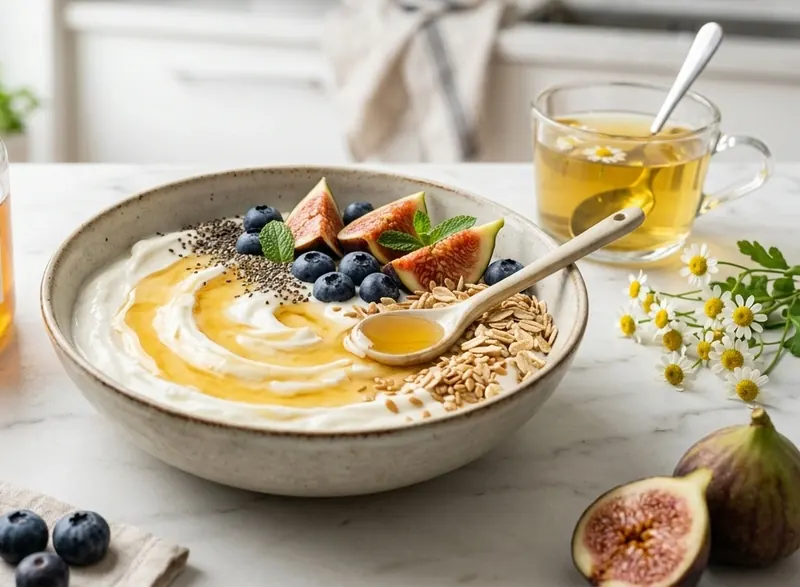
- Yogurt desserts, sauces and drinks
Better to keep sugar (or only replace part of it):
- Meringues and macarons, which need dry sugar crystals for structure
- Crisp biscuits and shortbread, which turn soft
- Recipes where butter and sugar are "creamed" to trap air; replace no more than half the sugar here
If you are unsure, begin by replacing half the sugar with honey. You will keep the original texture while gaining some honey flavour and moisture.
A practical tip: lightly oil your measuring spoon or cup before measuring honey and it will slide right out. And if your honey has crystallized, warm the jar gently in a bowl of warm water first; our post on why honey crystallizes explains why this is nothing to worry about.
Four short recipes
Recipe 1: Honey walnut yogurt cake
A soft Turkish-style "yoğurtlu kek" sweetened only with honey.
- 3 eggs
- 150 g mild flower honey
- 200 g plain yogurt
- 100 ml sunflower oil
- Zest of 1 lemon
- 250 g plain flour
- 10 g baking powder (one Turkish sachet of kabartma tozu)
- ¼ tsp baking soda
- 80 g chopped walnuts
Whisk the eggs and honey until pale, then whisk in the yogurt, oil and zest. Fold in the flour, baking powder and soda, then the walnuts. Bake in a lined loaf tin at 165°C (instead of the usual 180°C) for 35–45 minutes, covering with foil if the top browns too fast. It keeps moist for several days.
Recipe 2: Honey lemon olive oil dressing
- 3 tbsp extra virgin olive oil
- 1 tbsp lemon juice
- 1 tsp honey
- ½ tsp mustard
- Salt and black pepper
Shake everything in a jar. The honey helps the oil and lemon blend smoothly. Excellent on a shepherd's salad, rocket with beyaz peynir, or roasted vegetables.
Recipe 3: Honey garlic chicken thighs
- 6 boneless chicken thighs
- 2 tbsp honey
- 2 tbsp soy sauce
- 2 cloves garlic, crushed
- 1 tsp pul biber (Turkish red pepper flakes)
- 1 tbsp olive oil
Mix everything except the chicken, then coat the chicken and leave for 30 minutes. Pan-fry over medium heat, not high, turning often, because the honey glaze can burn quickly. Add a splash of water at the end to loosen the sauce.
Recipe 4: Tahin-bal (tahini and honey spread)
A classic of Turkish breakfast tables.
- 2 tbsp tahini
- 1 tbsp honey
Stir together on a small plate until glossy and eat with fresh bread. Some people add a few crushed walnuts. No heat is involved, so this is the place to use your best raw honey and really taste it. For more breakfast ideas, see our guide to bal kaymak and the Turkish breakfast.
A word on health
Honey is not a "sugar-free" option. It is itself a sugar, mostly fructose and glucose, and it contributes calories much like table sugar. Use it because you like its flavour and texture, and enjoy it in moderation. If you have diabetes or are managing your blood sugar, ask your doctor before changing your diet. And remember that honey, even baked into food, should not be given to babies under 12 months old.
Conclusion
Cooking with honey instead of sugar comes down to using a little less, cutting the liquid, adding a pinch of baking soda and lowering the oven. Start with recipes that welcome moisture, such as cakes, dressings and glazes, and keep sugar for meringues and crisp biscuits.
If you need a mild, versatile honey for your kitchen, have a look at our raw flower honey. After a quick confirmation call, you pay by havale/EFT and we send your jar by cargo with a tracking number. You are welcome to call us with any question first.
Frequently asked questions
How much honey do I use instead of 1 cup of sugar?
Start with ¾ cup of honey for every cup of sugar, or as little as ½ cup if you prefer a less sweet result. Reduce the other liquids in the recipe by about ¼ cup for each cup of honey used.
Why does my honey cake burn on top?
Honey contains fructose, which browns at lower temperatures than table sugar. Lower the oven by about 15°C, check the cake earlier and cover the top loosely with foil if it colours too quickly.
Can I replace all the sugar with honey in baking?
In moist cakes, muffins and loaves you usually can. In crisp biscuits, meringues or recipes that rely on creaming butter and sugar, replace no more than half the sugar, because honey makes the texture softer.
Is baking with honey healthier than baking with sugar?
Honey is still a sugar and adds calories much like table sugar, so it should be used in moderation. Many people choose it for its flavour and moist texture. If you need to manage your sugar intake, consult your doctor.