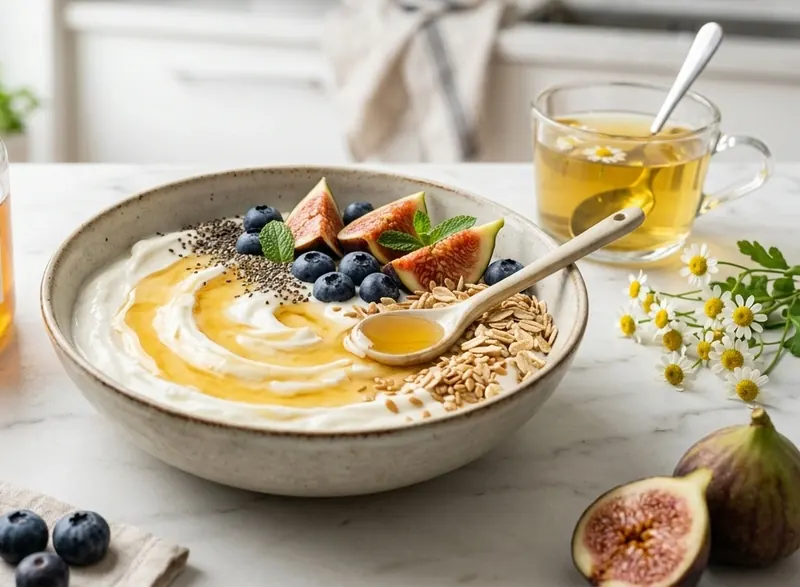
Bal kaymak is a Turkish breakfast dish of thick clotted cream (kaymak) served with honey (bal), eaten with fresh bread or simit. Kaymak is made by gently heating milk and letting a rich layer of cream form and set on top; traditionally it comes from water buffalo milk. Spread together on warm bread, the cool, mild cream and the sweet honey make one of the most loved bites of a Turkish breakfast.
If you have sat down to a Turkish kahvaltı (breakfast), you know it is less a meal than a spread: cheeses, olives, tomatoes, cucumbers, eggs, jams, and almost always a small plate of honey. Bal kaymak is the moment that plate becomes something special.
A little about the Turkish breakfast
The word kahvaltı comes from kahve altı, roughly "before coffee". Breakfast was the food you ate before your morning coffee, and today it is often eaten with endless glasses of black tea instead.
On weekends, families and friends linger over long breakfasts at home or in breakfast cafés, sometimes for hours. Honey sits on the table alongside jams and pekmez (grape molasses), and it is often served still in the comb as petek bal, cut into squares. Kaymak is the luxurious extra that turns an ordinary breakfast into a treat.
What exactly is kaymak?
Kaymak is often translated as "clotted cream", and that is a fair comparison to the English version, though the method and texture differ a little.
How it is made, in short:
- Fresh, full-fat milk is heated slowly in a wide, shallow pan.
- It is kept just below a simmer for a long time so the cream rises.
- The pan is left to cool, often overnight, and the cream on the surface thickens into a dense, slightly layered sheet.
- The kaymak is lifted off in thick folds or rolls.
The best-known types:
| Type | Milk | Notes |
|---|---|---|
| Manda kaymağı | Water buffalo | Very rich, pure white, considered the classic |
| Afyon kaymağı | Traditionally water buffalo | From Afyonkarahisar; a registered geographical indication in Türkiye |
| İnek kaymağı | Cow | Most common in supermarkets, milder and slightly yellower |
Good kaymak tastes clean, milky and only faintly sweet. It is not whipped cream and not butter: it is thicker than cream and lighter than butter, with a delicate chew to the top layer.
Where to eat bal kaymak in Türkiye
You can order bal kaymak almost anywhere that serves a proper breakfast, but some places make it a ritual.
- Istanbul. Breakfast is a serious affair here. Neighbourhoods like Beşiktaş, with its street of breakfast cafés, and the Bosphorus villages are famous for weekend spreads. Many old-style dairy shops (muhallebici and mandıra shops) also sell fresh kaymak.
- Afyonkarahisar. The home of Afyon kaymağı, where kaymak is a local pride and also used in desserts.
- Van and the east. "Van kahvaltısı" is a famous style of breakfast with many local cheeses and dairy products, often including kaymak and honey; Van-style breakfast cafés exist in many other cities too.
- The Black Sea. Highland honey, butter and dairy are central to breakfasts in the region.
- Coastal resorts. In Antalya and Alanya, many cafés serve a "serpme kahvaltı" (a breakfast of many small plates), and bal kaymak is usually on the menu or available on request.
Tip: in a café, ask "Bal kaymak var mı?" (Do you have bal kaymak?). The dish usually arrives as a mound of kaymak with honey poured over or alongside it.
How to serve bal kaymak at home
Recreating it at home is easy if you buy good ingredients.
What you need
- Fresh kaymak (from a dairy shop, a market or the chilled section of a supermarket)
- A honey you enjoy (a mild flower honey is the classic choice)
- Fresh bread, simit, pişi (fried dough) or bazlama (griddle flatbread)
- Strong black tea to drink
Steps
- Take the kaymak out of the fridge about 15 minutes before serving so it softens slightly. Very cold kaymak is stiff and less flavourful.
- Warm the bread briefly in the oven or on a pan.
- Plate the kaymak in a small dish, keeping its folds rather than mashing it.
- Add the honey in a separate small bowl or pour a ribbon over the top. Let people control the ratio.
- Eat by spreading a generous layer of kaymak on the bread, then honey on top.
Choosing the honey
A light or medium flower honey is the traditional partner, because it lets the cream's flavour come through. Comb honey adds a pleasant waxy chew. If you like contrast, try a darker honey: a little Black Sea chestnut honey has a bitter edge that cuts through the richness, and pine honey gives a less sweet, woody note. If your honey has crystallized, it still works well; creamy, set honey actually spreads nicely on kaymak.
Storing kaymak and honey
Kaymak is a fresh dairy product. Keep it in the fridge and eat it within a few days, following the date on the package. Honey, on the other hand, is happiest at room temperature in a closed jar, away from sunlight. Don't store honey in the fridge just because you serve it with kaymak; the cold makes it thick and speeds up crystallization. Read more in why honey crystallizes.
Enjoy it as a treat
Bal kaymak is rich: cream plus honey is a lot of fat and sugar. It is best enjoyed the Turkish way, as part of a leisurely weekend breakfast rather than every day. And remember that honey is not suitable for babies under 12 months.
Variations to try
- Desserts: kaymak is also served on top of baked quince (ayva tatlısı) and with kadayıf.
- Bal kaymak on pancakes: a modern café twist.
- Bal kaymak with walnuts: a sprinkle of chopped walnuts adds crunch.
- Bal kaymak with cheese plate: for more pairing ideas, see our honey and cheese pairing guide.
Conclusion
Bal kaymak is simple: good cream, good honey, warm bread and time to enjoy them. Whether you try it at an Istanbul breakfast café or at your own table in Antalya, the quality of the honey makes a real difference. If you'd like raw flower honey for your breakfast, you can order online: we confirm by phone, you pay by havale/EFT, and the jar goes out by tracked cargo. Or call us first with any question.
Frequently asked questions
What does bal kaymak mean?
Bal means honey and kaymak means Turkish clotted cream. Bal kaymak is the combination of the two, usually eaten on bread at breakfast.
Is kaymak the same as clotted cream?
They are very similar. Both are thick creams formed by slowly heating milk. Turkish kaymak is often made from water buffalo milk and has a slightly layered, chewy top.
Where can I buy kaymak in Turkey?
Fresh kaymak is sold in dairy shops, weekly markets and the chilled section of most supermarkets. Specialist dairy shops usually have the freshest product.
Which honey goes best with kaymak?
A light or medium flower honey is the classic choice because it doesn't overpower the cream. Comb honey is also popular, and darker honeys like chestnut give a bolder contrast.