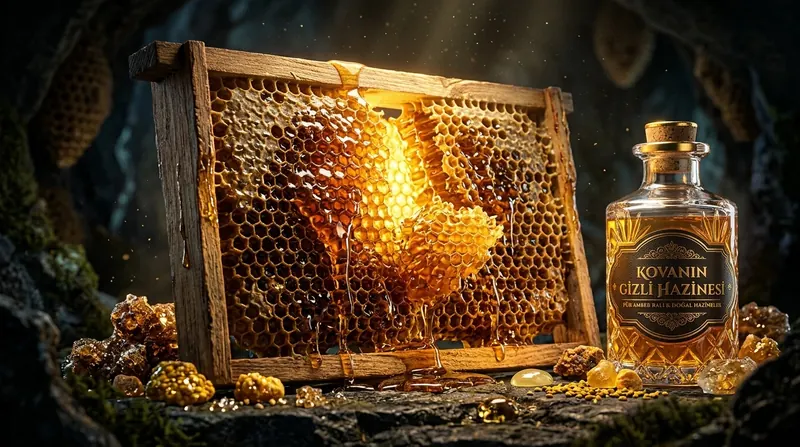
Bees make honey by collecting sugary nectar from flowers, mixing it with their own enzymes and then evaporating most of its water inside the hive until it becomes thick, stable honey. The enzymes split the nectar's sucrose into glucose and fructose, and worker bees fan their wings to dry it before sealing each cell with a wax cap. The beekeeper then removes the capped combs, uncaps them and spins the honey out.
That is the summary. Below, we follow one drop of nectar all the way from a flower on an Anatolian hillside to the jar on your breakfast table.
Stage 1: The forager visits the flower
Honey is made by worker bees, all of them female. The oldest workers, usually in the last weeks of their summer life, become foragers. A forager flies out, finds a flower and sucks up nectar through her long, tube-like tongue (the proboscis).
Nectar is a sweet liquid that plants produce to attract pollinators. It is mostly water with dissolved sugars, chiefly sucrose, and its sugar content varies a lot between plants and with the weather. A watery nectar can be well over half water.
The bee stores the nectar in a special organ called the honey stomach (or crop), which is separate from her digestive stomach. To fill it she may need to visit a large number of flowers on a single trip. While she is there, she also brushes against pollen, which is how bees pollinate plants and how pollen grains end up in honey.
Not all honey comes from flowers
Some honey is made from honeydew instead of nectar. Honeydew is a sweet liquid excreted by sap-sucking insects living on trees. Türkiye's famous pine honey (çam balı) is honeydew honey, made from the secretions of an insect that lives on pine trees in the Aegean region. We explain it in detail in Turkish pine honey.
Stage 2: Enzymes start the change
The transformation begins inside the forager while she is still flying home. Glands in her head add enzymes to the nectar:
- Invertase splits sucrose into its two simpler sugars, glucose and fructose. This is why finished honey contains very little sucrose.
- Glucose oxidase turns a small part of the glucose into gluconic acid, which makes honey slightly acidic.
- Diastase (amylase) is also present; labs measure its activity as an indicator of freshness and heat exposure.
Stage 3: Handing over in the hive
Back at the hive, the forager does not put the nectar away herself. She passes it mouth to mouth to younger house bees, a behaviour called trophallaxis. The nectar may be passed between several bees, each adding more enzymes, before it is deposited in a hexagonal wax cell.
The forager then heads straight back out. On a good day of nectar flow, the hive is extremely busy, and beekeepers in Türkiye say the colony is "bal yapıyor" (making honey) when they hear the steady hum at the entrance.
Stage 4: Drying the nectar
Fresh nectar is far too watery to keep; it would ferment. The bees solve this with evaporation:
- They spread nectar thinly across many cells rather than filling one cell at a time.
- Workers fan their wings to move warm air through the hive.
- The hive's warmth, kept around the mid-30s °C in the brood area, speeds up evaporation.
- Bees may also move droplets around on their tongues to expose them to air.
This continues until the water content falls to roughly 17–20%. At that point the sugar is so concentrated that yeasts cannot easily grow, and the honey is considered ripe.
| Nectar | Ripe honey | |
|---|---|---|
| Water | High, often more than half | About 17–20% |
| Main sugar | Sucrose (varies by plant) | Fructose and glucose |
| Shelf life | Ferments quickly | Very long when sealed |
| Texture | Thin, watery | Thick, viscous |
Stage 5: Capping the cell
When a cell of honey is ripe, the bees seal it with a thin lid of fresh beeswax. The wax comes from glands on the underside of young workers' abdomens. A frame of fully capped honey (sırlı petek) tells the beekeeper the honey is ready.
This is also how comb honey is sold: the capped comb is cut and packed without extraction. See our guide to honeycomb and how to eat it.
Stage 6: The beekeeper's harvest
The bees store honey as food for winter and for times when no flowers are blooming. A healthy colony in a good season produces more than it needs, and the beekeeper takes part of that surplus, leaving enough for the bees.
The typical steps are:
- Removing frames from the honey supers (the boxes above the brood area), usually after brushing or gently clearing the bees.
- Uncapping the wax lids with a heated knife or uncapping fork.
- Extracting in a centrifuge (santrifüj), which spins the frames so honey flies out of the cells while the comb stays intact and can go back to the hive.
- Straining through a sieve to remove wax pieces and bee parts.
- Settling in a tank for a while so air bubbles and fine wax rise to the top.
- Jarring, ideally without strong heating.
Honey that is only strained, not heavily heated or finely filtered, is usually called raw honey. The difference is explained in raw honey vs regular honey. Our own product is a raw blossom honey (ham çiçek balı); you can see it on the product page.
Why every honey tastes different
Because honey is concentrated nectar, its colour, aroma and texture depend on which plants the bees visited. Chestnut gives a dark, bitter honey; citrus a pale, floral one; mixed highland meadows a complex blossom honey. Soil, weather and the exact timing of harvest all play a part too. That is also why two jars of "flower honey" from different regions, or even different years, can look and taste quite unlike each other.
How can you know the process was honest?
The bees do their part reliably. Problems come later, if someone feeds bees sugar syrup during the nectar flow, harvests unripe honey or mixes syrup into the finished product. You cannot see these from the jar. A laboratory analysis is the practical way to check; the main tests are covered in honey lab tests explained. Our own blossom honey's report is published on our lab analysis page.
Conclusion
Honey is the result of a remarkably organised team effort: foragers collect nectar, house bees add enzymes and dry it, and wax builders seal it away. The beekeeper's job is to take a fair share without spoiling what the bees made. If you would like to taste a raw blossom honey made this way, you can order on our website or ask us any question on WhatsApp first.
Frequently asked questions
Do all bees make honey?
No. Only honey bees, and within the colony only the female worker bees, collect nectar and make honey. Drones and the queen do not forage.
Is honey bee vomit?
Not really. Nectar is carried in the honey stomach, a storage organ separate from the bee's digestive stomach, and it is never digested. It is passed between bees and then dried in the comb.
How long does it take bees to turn nectar into honey?
It depends on the nectar's water content, the weather and the strength of the colony. In a strong colony during a good flow, ripening often takes from a few days to a couple of weeks before cells are capped.
Why do beekeepers wait for the comb to be capped?
Capping signals that the bees have dried the honey to a safe water content. Harvesting uncapped, unripe honey risks high moisture and fermentation.
Do beekeepers leave honey for the bees?
Responsible beekeepers take only the surplus and leave enough honey for the colony to survive periods without flowers, especially winter.