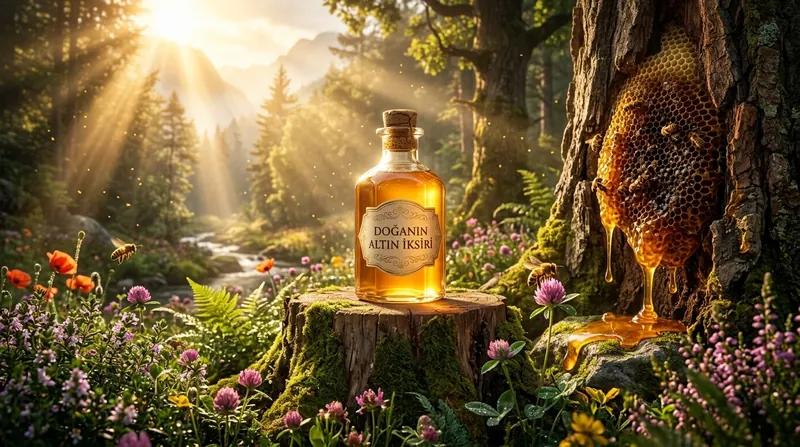
Anzer honey (Anzer balı) is a wildflower honey produced on the Anzer plateau in the İkizdere district of Rize, high in the mountains above Türkiye's eastern Black Sea coast. It is famous because the area is small, the season is short and the harvest is limited, so genuine Anzer honey is scarce and expensive. That scarcity is also why so much "Anzer honey" sold online and in tourist shops is not what the label claims.
This guide sets out what is reasonably well established about Anzer honey, what is mostly marketing, and how to protect yourself if you decide to buy some.
Where Anzer honey comes from
The name refers to a place, not a flower or a bee breed. The Anzer plateau (the village is officially called Ballıköy, literally "honey village") sits at well over 2,000 metres in the Kaçkar range of Rize province. Winters there are long and snowy, and the plateau is only really accessible for part of the year.
In early to mid summer the alpine meadows bloom in a short, intense burst. The flora of the northeast Anatolian mountains is rich and includes plants found only in this part of the world, so bees forage on a very mixed range of wildflowers and herbs. That mixture is what gives Anzer honey its reputation for a complex, herbal, slightly sharp aroma.
Why the harvest is so small
Several factors combine to keep volumes low:
- One short season. Bees have only a few warm weeks of real nectar flow before the plateau cools again.
- A defined area. Only honey produced within the registered Anzer area can legally carry the name.
- Weather dependence. A cold or rainy summer can cut the harvest sharply. Some years produce very little.
- Traditional, small-scale beekeeping. Production is spread across local families rather than large commercial apiaries.
Because of this, the amount of genuine Anzer honey available each year is modest, and it is usually sold out through known channels fairly quickly. Prices change every year depending on the harvest, so treat any article quoting a fixed price with caution.
The geographic indication: what it means
Anzer honey is protected in Türkiye as a geographic indication registered with the Turkish Patent and Trademark Office (TÜRKPATENT). In plain terms, this means:
- The name "Anzer" on a honey jar is supposed to guarantee a specific geographic origin.
- The honey must be produced in the defined area according to the registered description.
- Using the name on honey from elsewhere is a misuse of a protected name.
A geographic indication protects origin, not health properties. It tells you where the honey comes from and roughly what character to expect. It does not mean the honey has been proven to do anything for your body, and you should be sceptical of sellers who suggest otherwise.
How genuine Anzer honey is usually sold
Producers on the plateau work with a local producers' cooperative and association, and genuine honey is typically sold:
- in sealed jars or comb packs with official labels,
- with serial numbers or seals that identify the batch and allow it to be traced,
- often accompanied by an analysis report, since buyers paying a premium increasingly ask for one,
- in limited quantities, frequently pre-ordered before or during the harvest.
If you are serious about buying Anzer honey, the safest route is to buy directly from the producers' cooperative or from a retailer who can show you where their jars came from and provide the batch documentation.
How fake Anzer honey is sold
The gap between the small real supply and the large demand creates an obvious temptation. Common patterns include:
| Red flag | Why it matters |
|---|---|
| Unlimited stock all year round | Genuine supply is limited and usually sells out |
| "Anzer" printed on a generic label with no seal or serial number | Cannot be traced to the protected source |
| Price far below what known sellers charge | Real Anzer honey is costly to produce and transport |
| Sold loose from large tins in tourist markets | Easy to mix or relabel |
| Wording like "Anzer type", "Anzer style" or "highland honey like Anzer" | Borrowing the name without the origin |
| Big health promises on the label or by the seller | A sign of marketing, not of authenticity |
Note that not every "yayla balı" (highland honey) from Rize, Trabzon or Artvin is fake. Many plateaus in the eastern Black Sea region produce excellent mountain flower honey. The problem is only when such honey is sold under the protected Anzer name.
Can you tell by taste or by home tests?
Not reliably. Anzer honey varies from year to year and from hive to hive, so there is no single "correct" taste or colour. Home tricks such as the water test or the flame test cannot confirm a geographic origin. Our guide on how to spot fake honey explains which checks are useful and which are myths.
What can actually distinguish origin is laboratory work, especially pollen analysis, which identifies the plants the bees visited. If the pollen profile does not match the alpine flora of the area, the honey is unlikely to be from Anzer. You can read more about this in honey lab tests explained.
Separating fact from folklore
Anzer honey has gathered many stories over the years, including claims that it contains hundreds of plant species or has extraordinary health effects. Here is a sober way to think about it:
- True: It comes from a high-altitude area with diverse wildflowers and a short season.
- True: Its name is legally protected as a geographic indication in Türkiye.
- True: Supply is limited and it is widely imitated.
- Not supported as a product claim: that it cures, treats or prevents any illness. Like all honey, it is mainly sugars (fructose and glucose) with roughly 17–20% water, and it should be enjoyed in moderation.
- Important for families: no honey, Anzer included, should be given to babies under 12 months old.
Is Anzer honey worth it?
That depends on what you are looking for. If you value a rare regional product with a distinctive taste and a clear story of origin, a verified jar of Anzer honey can be a lovely thing to try once, much like a single-estate tea or a protected cheese. If you simply want good, natural honey for breakfast, tea and cooking, you do not need Anzer. Türkiye produces a remarkable range of honeys, as our guide to Turkish honey varieties shows, and a well-sourced raw flower honey at a fair price will serve you very well every day.
Whatever you buy, the principle is the same: ask where the honey comes from, ask for the analysis report, and be wary of stories that sound too good.
Conclusion
Anzer honey is real, rare and genuinely interesting, but its fame has made it one of the most counterfeited foods in Türkiye. Buy only sealed, traceable jars from known sources, ignore health promises, and do not judge authenticity by taste alone.
At GüvenilirBal we sell one product, raw flower honey, and we do not sell Anzer honey. If you would like a trustworthy everyday honey, you can see our raw flower honey, call us with any question before ordering, and pay by bank transfer once we have confirmed your order by phone. We ship after payment and send you the tracking number.
Frequently asked questions
Where exactly is Anzer honey produced?
Anzer honey is produced on the Anzer plateau (Ballıköy) in the İkizdere district of Rize province, in the mountains of Türkiye's eastern Black Sea region, at an altitude of over 2,000 metres.
Is Anzer honey a protected name?
Yes. Anzer honey is registered as a geographic indication in Türkiye, which means the name should only be used for honey produced in the defined Anzer area according to the registered description.
Why is Anzer honey so expensive?
The production area is small, the flowering season is short, the harvest depends heavily on the weather and production is small-scale, so supply is limited each year while demand is high.
How can I avoid fake Anzer honey?
Buy sealed jars with official labels, seals or serial numbers from the producers' cooperative or a retailer who can document the source, ask for an analysis report including pollen analysis, and avoid cheap, unlimited stock or loose honey sold under the Anzer name.
Can babies eat Anzer honey?
No. Like any honey, Anzer honey should not be given to infants under 12 months old because of the risk of infant botulism.